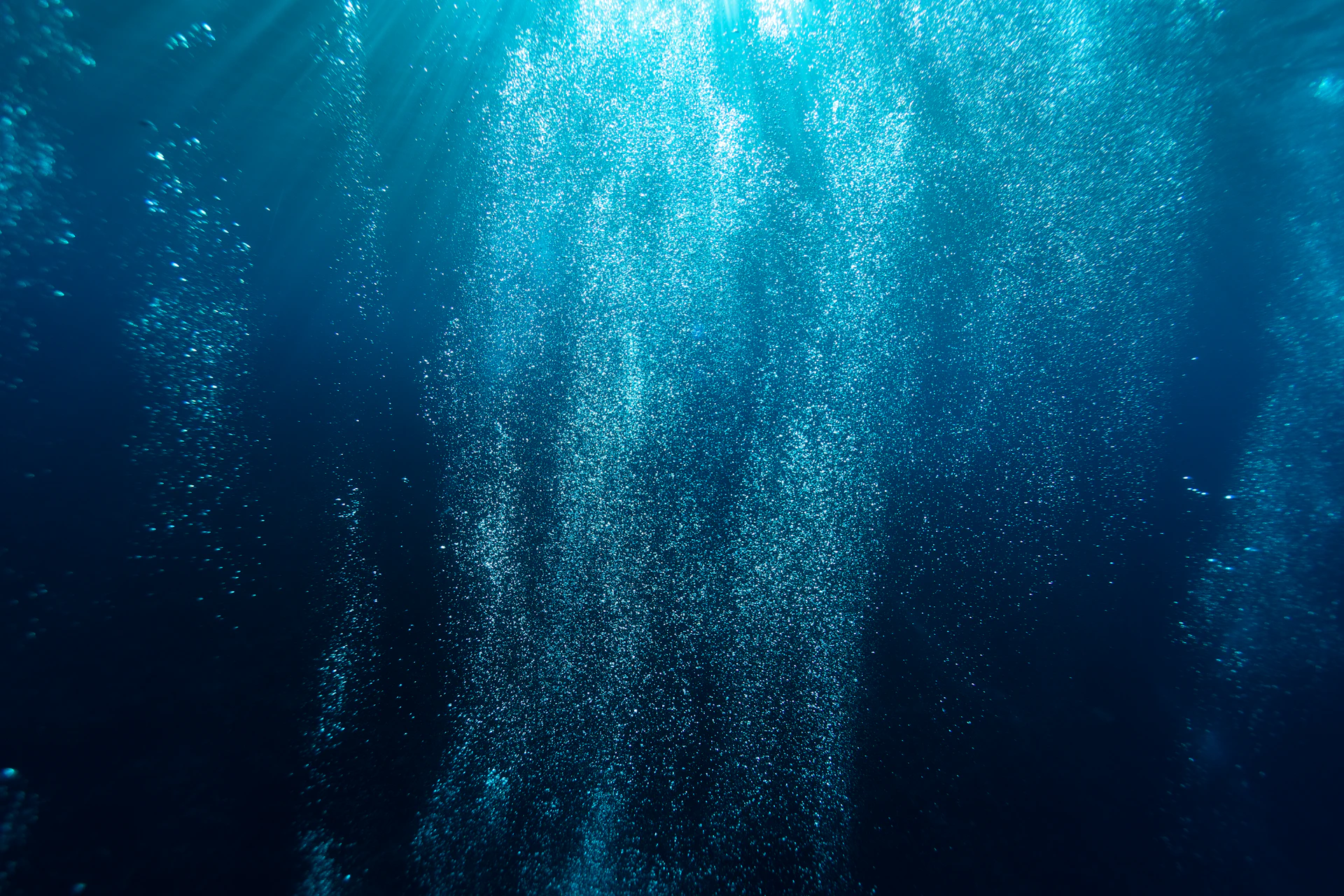
Western Pacific Ocean · Mariana Islands
Challenger Deep, the lowest known point on Earth’s surface — deeper below sea level than Mount Everest stands above it. Fewer people have been here than have walked on the Moon.
The Descent
The ocean is layered by how far light can reach. The Mariana Trench is the only place on Earth that spans all five — down to the hadal zone, found only in the deepest trenches.
0–200 m
Epipelagic
Sunlight drives photosynthesis. Nearly all ocean life is concentrated here.
200–1,000 m
Mesopelagic
Faint light only. Many species migrate up at night to feed.
1,000–4,000 m
Bathypelagic
Total darkness. Bioluminescence becomes the primary form of communication.
4,000–6,000 m
Abyssopelagic
Near-freezing water, crushing pressure. Life here is slow and sparse.
6,000–11,000 m
Hadopelagic
Ocean trenches only. The Mariana Trench is the deepest of them all.
1,086 bar
Pressure at the bottom — over 1,000× sea-level atmospheric pressure
1–4°C
Water temperature near-freezing, despite localized hydrothermal vents
12 vs 6
More people have walked on the Moon than have reached Challenger Deep
1960
Year of the first crewed descent — nine years before the Moon landing
Life at the Bottom
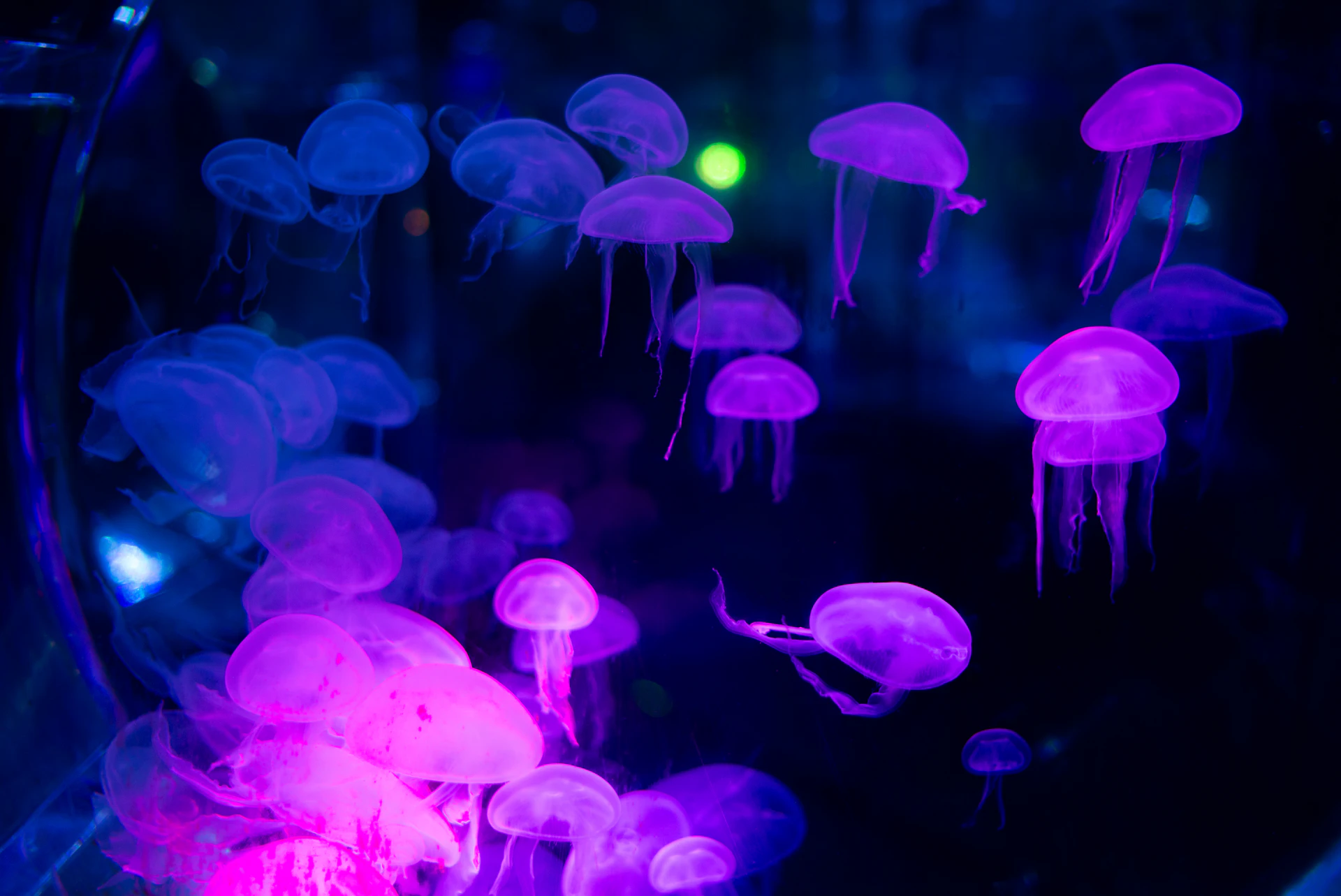
Without light, most deep-sea life produces its own — bioluminescence is used to lure prey, startle predators, and find mates in permanent darkness.
The Mariana snailfish (Pseudoliparis swirei) holds the record for deepest fish ever observed, at roughly 8,000 m. Below that, life continues in stranger forms: amphipods, and xenophyophores — single-celled organisms that can grow to the size of a fist.
At Challenger Deep itself, at nearly 11,000 m, the pressure is so extreme that most vertebrate life cannot survive it at all.
Exploration History
First recorded sounding of the trench, using a weighted rope — depth estimated at over 8,000 m.
Jacques Piccard and Don Walsh become the first humans to reach Challenger Deep, in a bathyscaphe built for exactly this dive.
James Cameron completes the first solo descent, spending nearly 3 hours at the bottom collecting samples and footage.
Victor Vescovo dives repeatedly to Challenger Deep, mapping it in higher resolution than ever before.
Becomes the first woman to reach Challenger Deep — and the first person to have both walked in space and reached the ocean's deepest point.
Abyss
This landmark / science communication site is a live demo. I'll customize it — your name, colors, content — and launch it as your real site.
More demos by Nordbüro
Fixed-price packages from €799 — nordburo.studio